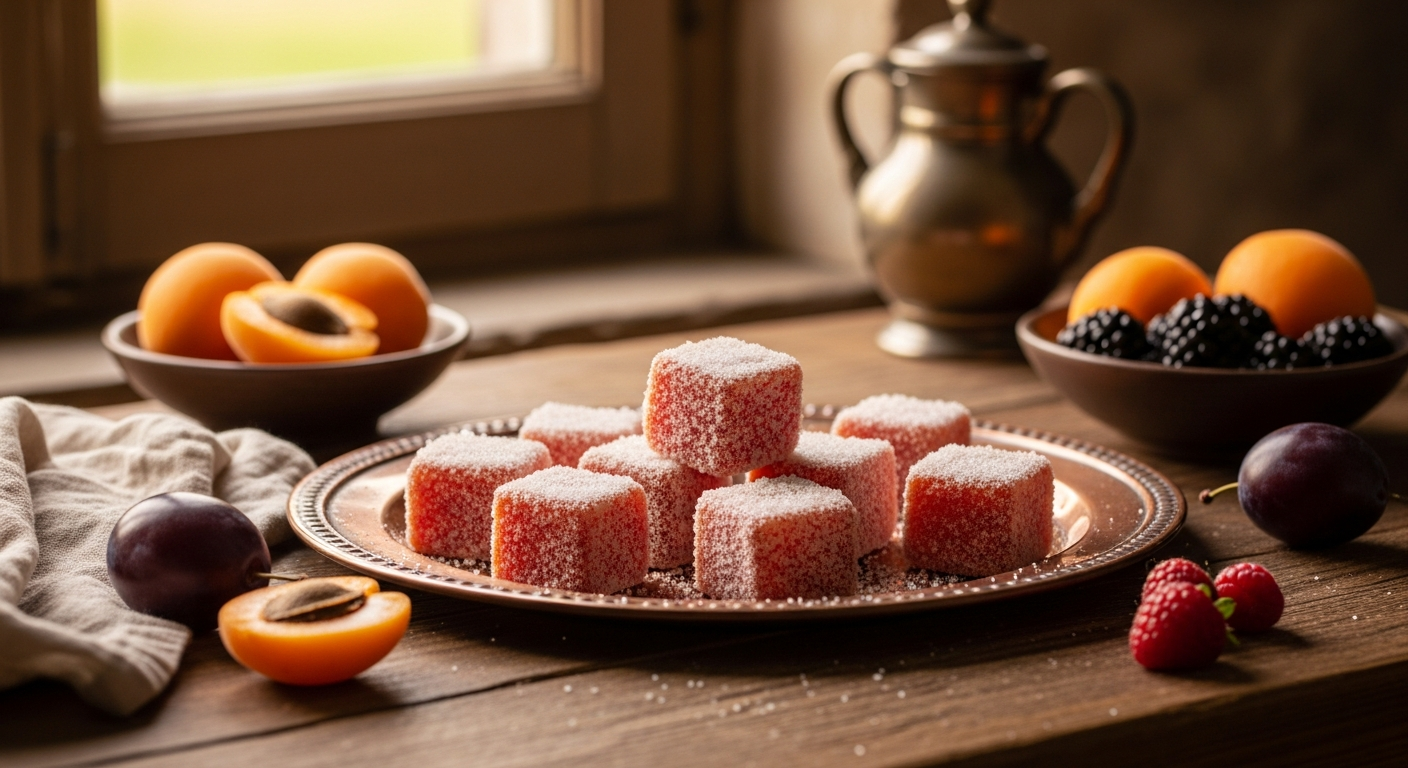
The Art of Traditional French Pâte de Fruit
Long before the invention of the modern gummy bear, there was pâte de fruit (pronounced 'pat-duh-fwee'). To call it a 'gummy' is almost a disservice—it is a concentrated, luxurious celebration of fruit that dates back over a thousand years.
The Origins in Auvergne
The story of pâte de fruit begins in the 10th century in the Auvergne region of central France. Before the advent of modern refrigeration, preserving the bountiful summer harvests was a matter of survival. The local method? Boiling down fresh fruit purees with sugar and natural pectin until they formed a thick, sliceable paste. Originally known as confitures sèches (dry jams), these fruit pastes allowed the French to enjoy the taste of summer apricots, plums, and berries deep into the harsh winter months.
A Royal Delicacy
By the Renaissance, what started as a humble preservation method had evolved into an elite culinary art form. Pâte de fruit became a staple at royal banquets and was famously presented as a prized gift to visiting dignitaries and monarchs. The city of Clermont-Ferrand became the undisputed capital of this confection, where master craftsmen fiercely guarded their proprietary recipes.
The Alchemy of Pectin and Sugar
Unlike modern commercial candies that rely on animal-derived gelatin or corn syrup for their chew, authentic pâte de fruit owes its tender, melt-in-the-mouth texture entirely to pectin—a natural carbohydrate found in the cell walls of fruits, particularly apples and citrus. When combined with sugar and heat, pectin forms a delicate, natural gel.
The hallmark of a true pâte de fruit is its sparkling exterior. The candies are meticulously rolled in coarse, crystalline granulated sugar. This isn't just for sweetness; the heavy sugar coating provides a satisfying crunch that yields to the soft, intensely flavored jelly inside, while also acting as a natural shield to keep the interior perfectly moist.
The Craft Lives On
Today, the tradition of pâte de fruit represents the pinnacle of confectionery craftsmanship. It demands patience, precise temperature control, and most importantly, an absolute obsession with using the highest quality fruit available—a tradition we are proud to continue.
Article text adapted from the historical culinary works of L. Girard and the archives of the Confédération Nationale des Artisans Pâtissiers. Published with respect to the traditional confectioners of Clermont-Ferrand.